University of Newcastle
DesignOps
The Service Experience practice is a collection of UX, UI, service, and content designers that provide design services across the Digital Technology Solutions (DTS) portfolio. I lead the strategic design direction of DTS, uplifting design maturity across the business unit (and university), and improving design literacy across the university with stakeholders who have limited experience working with design as a problem-solving tool.
Digital Design Tool Kit
A key output of the Service Experience Practice that has contributed to the evolved design maturity has been the launch of the university Digital Design Tool Kit in May 2025
Design Milestones
Task
From a delivery perspective there was a lack of understanding of design tasks and their order on projects. Two main issues were design services were not being allocated early enough in the project life cycle, and then not being given the time needed to complete design work. Design Milestones were created so they could be inserted into the existing Project Management Framework (PMF) to better manage project expectations of design services, and ultimately create better outcomes for users.
My role
I created the design milestones in collaboration with designers and project managers, and in consultation with the Head of Delivery. The design milestones aligned with existing project stages in the PMF - Start Up, Initiate, Execution, and Close. After endorsement from senior management the milestones were launched and presented to the Delivery Practice. Post-launch, I support designers and negotiated milestone outputs at the kick off at of each project.
Outcome
Design milestones have allowed designers access to project managers that we previously didn’t have. It has facilitated meaningful conversation and negotiation directly with project managers to create more better quality design briefs and outputs.
Collaborative relationships have been strengthened as design activities and artifacts are transparently exposed and opens doors for collaboration with other specialisations.
I have also been able to use the design milestones as a negotiation tool to demonstrate the value of design to project outputs when discussing to design resource allocations with project managers.
Revision of Design Principles
Digital Technology Solutions created an initial set of UX design principles in 2019. In 2025, it was time to revise these principles. The impetus to review these principles came from the Enterprise Architecture activity where I was tasked with creating the experience layer for the Capability Blueprints. The principles were used to guide how implementation of the Capability Blueprints would work in practice and I also created a low fidelity working prototype of the Enquiry/Admission/Enrolment workflow.
These revised design principles have been adopted as part of the assessment process of the Architecture Review Board, Solution Review Board and the Application Portfolio Assessment process. They have also been embedded in the Request for Proposal (RFP) requirements template and the assessment of RFP submissions.
As these principles are now included in the university Digital Design. Tool Kit the intention is for these principles to be adopted university wide to support consistency across the entire university digital footprint.
I have strategically led the practice from establishment and low maturity in 2022 (‘limited’ based on Nielsen Norman Group’s Stages of UX Maturity. The practice has reached our desired level of maturity (‘integrated’ based on Nielsen Norman Group’s Stages of UX Maturity) at the end of 2025. I have used tactics focused on process and culture to increase design maturity:
hosting regular lunch and learns aimed across the business unit such as “What is Service Design?” and “Good Experience = Good Compliance”
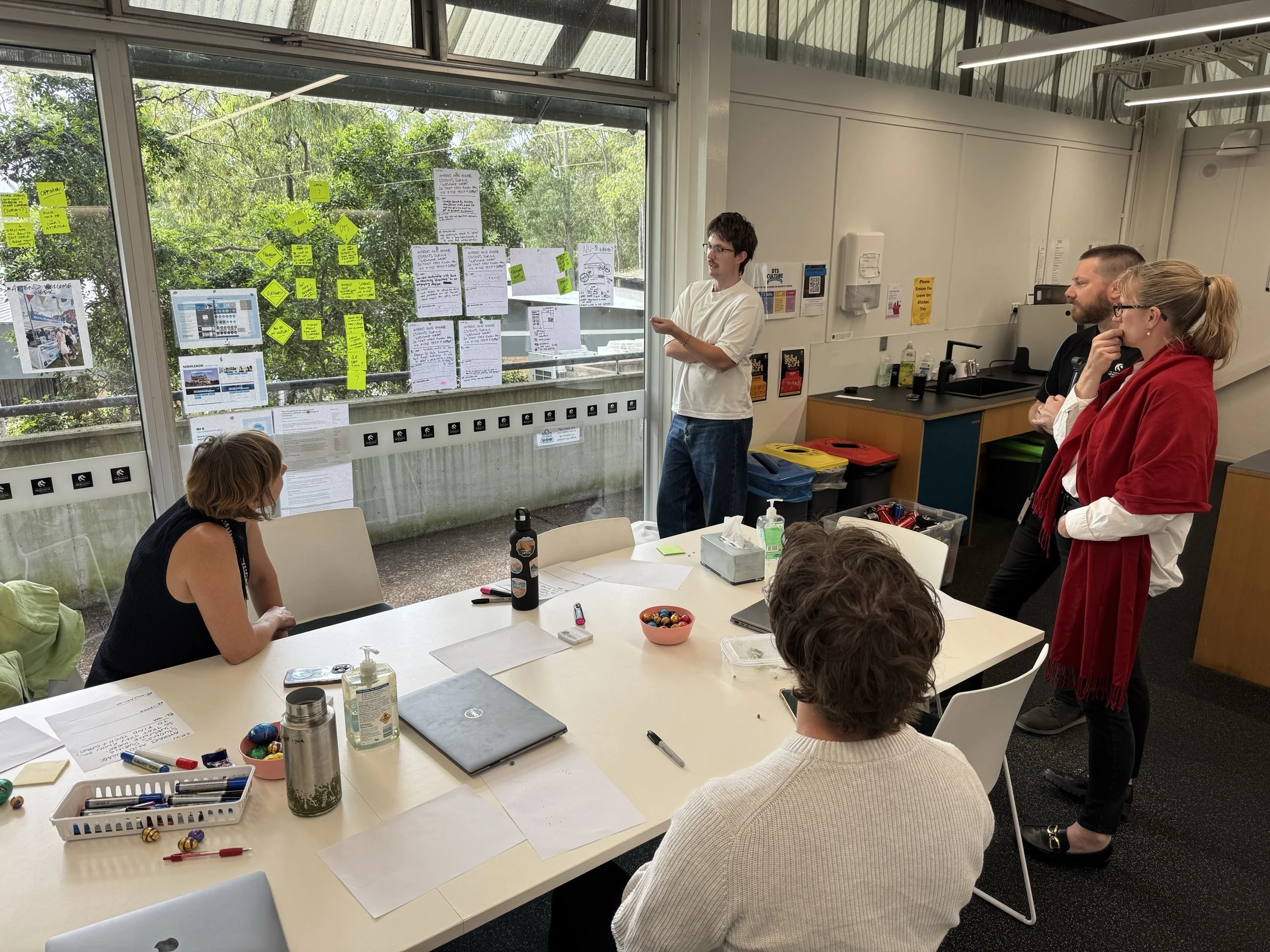
transparently demonstrating design processes and activities, eg. space take overs in open areas and providing workshop facilitation services to planning days for other practice areas
Build practice culture with the establishment of Service Experience Community of Practice that includes attendees from other practices areas
develop re-usable processes and templates through documenting processes, creating shared tools and templatizing Service Experience practice activities and artifacts.